Stainless Steel vs Carbon Steel for Industrial Components: How Do You Choose?
Your new bracket design is strong and simple. But uncoated, it will be a rusty mess in weeks. Coating it adds cost and a potential point of failure. Is there a better way?
The choice between stainless and carbon steel is a trade-off between upfront cost and long-term performance. Carbon steel is cheap and strong but requires a protective coating, while stainless steel offers built-in corrosion resistance for a higher initial price.
Early in my career, I sourced a set of simple stamped steel levers for an agricultural equipment manufacturer. To save money, we opted for 1018 carbon steel with a basic zinc plating. A year later, I got an angry call. The levers used in coastal areas were failing; the salty air had eaten through the zinc plating, and the underlying steel was rusting solid. We had to re-tool the entire project using 316 stainless steel at a much higher cost than if we had just chosen it from the start. That lesson was painful, but permanent: you don't choose a material based on its price tag alone. You choose it based on its total lifetime cost in its intended environment.
¿Cuál es la diferencia fundamental entre el acero inoxidable y el acero al carbono?
At a glance, they are both "steel." They are both strong, heavy, and can be machined or formed. So where does the fundamental difference lie?
The defining difference is the addition of a minimum of 10.5% chromium to stainless steel. This single element creates a passive, self-healing layer that protects the iron from oxidation, or rust.
La Diferencia Clave: Cromo
Steel, at its core, is an alloy of iron and carbon. Carbon steel has very few other alloying elements. Stainless steel takes this base and adds a significant amount of chromium, and often nickel. This is the entire secret to its "stainless" property. A great resource for digging into specific grades is the American Iron and Steel Institute (AISI).
| Component | Carbon Steel (e.g., 1018) | Stainless Steel (e.g., 304) |
|---|---|---|
| Iron (Fe) | ~98-99% | ~65-75% |
| Carbon (C) | 0.15% - 0.20% | < 0.08% |
| Chromium (Cr) | Negligible | 18-20% |
| Nickel (Ni) | Negligible | 8-10.5% |
El Mecanismo de Pasivación
When stainless steel is exposed to oxygen, the chromium on the surface instantly reacts to form a very thin, tough, transparent layer of chromium oxide. This layer is "passive," meaning it doesn't react with most other elements. If this layer is scratched, the exposed chromium underneath immediately reacts with the air and "heals" the layer. Carbon steel has no such mechanism. Once scratched, the exposed iron reacts with oxygen and moisture to form iron oxide (rust), which flakes away to expose fresh iron, and the cycle continues until the part is destroyed.
Impacto en la Apariencia Visual
This difference is immediately obvious. Carbon steel is a dull, matte gray that will quickly show surface rust if left unprotected. Stainless steel has a bright, silvery luster that it maintains without any external coating. This makes it a go-to choice for applications where appearance is important, from architectural fittings to consumer appliances.
Comment la résistance à la corrosion se compare-t-elle réellement?
We know stainless steel doesn't rust, but what does that mean in a real-world industrial environment with chemicals, moisture, and salt?
Carbon steel has virtually no inherent corrosion resistance and will begin to rust immediately in the presence of moisture. Stainless steel's passive layer provides excellent to exceptional corrosion resistance, depending on the grade selected.
Acier au Carbone: Vulnérabilité à la Rouille
For carbon steel, corrosion is not a risk; it is a certainty. To use a carbon steel part in almost any application, it must have a secondary finish. This could be paint, powder coating, zinc plating, or hot-dip galvanizing. These coatings add cost and complexity and can be chipped or scratched, creating a failure point. Our stamping parts are often made from carbon steel, but we always have a detailed discussion with the client about the required protective finish.
Acier Inoxydable: La Couche Passive en Action
The corrosion resistance of stainless steel is built into the metal itself. There is no coating to chip or wear away. This makes it incredibly reliable for long-term performance. Even if the surface is abraded, the protective layer instantly reforms. This is why it is the default choice for sterile environments like food processing and medical devices.
Choisir la Bonne Nuance d'Inox
Not all stainless steels are created equal. The two most common grades are:
- 304 Stainless: This is the workhorse of the industry. It has excellent corrosion resistance for general atmospheric conditions and is widely used in kitchen equipment and general fabrication.
- 316 Stainless: This grade has added molybdenum. This small addition dramatically increases its resistance to chlorides, like salt and certain industrial chemicals. For any marine application or parts exposed to de-icing salts, 316 is non-negotiable.
Quais são as diferenças em propriedades mecânicas e resistência?
Many engineers assume carbon steel is always the stronger, tougher option. Is that true?
Generally, carbon steel offers higher hardness and strength for a lower cost. However, stainless steel often provides a better combination of strength, toughness, and ductility, especially the common austenitic grades like 304.
A Força Bruta do Aço Carbono
Carbon steel can be heat-treated to achieve very high levels of hardness and tensile strength. This makes it ideal for applications where raw strength and abrasion resistance are the primary concerns, such as structural beams, wear plates, and cutting tools. A simple medium-carbon steel like 1045 can be hardened to be much harder than any common stainless steel.
A Versatilidade do Aço Inoxidável
While not always as hard as heat-treated carbon steel, austenitic stainless steels like 304 are incredibly tough and ductile. This means they can absorb a lot of energy and deform significantly before fracturing. This toughness makes them excellent for parts that might experience impacts or sudden loads. Many complex parts we produce via metal casting leverage this combination of properties.
Dureza, Ductilidade e Tenacidade
Thinking about these properties is key. A material can be very hard but brittle (like glass), or it can be less hard but very tough (like stainless steel). For a part that needs to bend before it breaks, stainless is often the superior choice.
| Property (Typical Values) | 1018 Carbon Steel | 304 Stainless Steel |
|---|---|---|
| Tensile Strength | 440 MPa | 620 MPa |
| Yield Strength | 370 MPa | 290 MPa |
| Hardness (Brinell) | 126 | 149 |
| Elongation (Ductility) | 15% | 70% |
كيف يختلف السعر وتكلفة التصنيع؟
This is often the deciding factor for a buyer. Why is stainless steel so much more expensive, and how does that affect the final part price?
Stainless steel's raw material cost is significantly higher due to expensive alloying elements like chromium and nickel. It is also tougher to machine, leading to longer cycle times and higher manufacturing costs.
تحليل التكلفة الأولية
The price of nickel and chromium on the global markets directly impacts the cost of stainless steel. These metals are many times more expensive than iron and carbon. This means that pound for pound, a bar of 304 stainless steel will always be substantially more expensive than a bar of 1018 carbon steel. You can find more detail on the composition and discovery on the Wikipedia page for Stainless Steel.
قابلية التشغيل الآلي: التأثير على وقت الإنتاج
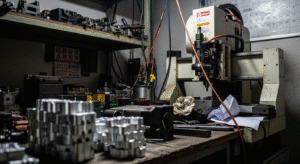
Carbon steel is relatively soft and easy to machine. We can run our CNC machines at high speeds and feeds, resulting in short cycle times. Stainless steel is "gummy" and work-hardens, meaning it gets tougher as you cut it. We must run our machines slower, use more expensive tooling, and take lighter cuts. This increases the machining time per part, which adds directly to the labor and machine cost.
التكلفة الإجمالية للملكية (TCO)
Smart buyers don't just look at the purchase price. They look at the Total Cost of Ownership.
- Carbon Steel Part: (Low Material Cost) + (Low Machining Cost) + (Cost of Plating/Painting) + (Risk of Future Replacement Due to Corrosion) = Total Cost
- Stainless Steel Part: (High Material Cost) + (High Machining Cost) = Total Cost For a part with a long-expected service life in a corrosive environment, the stainless steel option is often cheaper in the long run.
About the Author
My name is Kevin. I founded Prime Metals in China in 1993 after years as an industrial buyer in the United States. I've seen firsthand how a seemingly small material choice can make or break a product. I built my company on the principle of partnership—we’re not just a supplier, we are a technical resource dedicated to helping you make the most effective and cost-efficient decisions for your components, backed by full ISO 9001 compliance.
Frequently Asked Questions (FAQs)
Is stainless steel magnetic?
It depends on the grade. Austenitic stainless steels like 304 and 316 are generally non-magnetic. However, ferritic and martensitic stainless steels, like the 400 series, are magnetic. Cold working (like bending or stamping) can also induce some magnetism in 304.
Can carbon steel be made to look like stainless steel?
Yes, through processes like chrome plating. A chrome-plated carbon steel part can look identical to a stainless steel part. However, this is just a thin coating. If it gets scratched, the underlying carbon steel will rust.
What is the best way to clean stainless steel parts?
For industrial components, cleaning with a mild solvent to remove oils is usually sufficient. For architectural or aesthetic applications, special stainless steel cleaners can be used to remove fingerprints and restore luster without scratching the surface.
Making the Right Choice for Your Project
The decision is clear: If your component will be protected, painted, or used in a dry, controlled environment and you need maximum strength for the lowest price, carbon steel is your answer. If your component will be exposed to moisture, chemicals, or salt, or if you need a clean, long-lasting finish without secondary processing, stainless steel is the only reliable choice.
Partner with an expert who can guide you to the right solution from the start.