Steel of Steel: How Do You Select the Right Steel Grade for Industrial OEM Components?
Your new bracket design passes all the stress tests on the computer. But after the first production run, the parts are cracking during the bending process. What went wrong?
Selecting the right steel grade is a critical balance between performance, manufacturability, and cost. It requires matching your component's specific needs—strength, hardness, corrosion resistance—to a specific steel family and grade through a clear, systematic process.
"Just make it out of steel." I've heard that phrase thousands of times. It’s one of the most dangerous instructions you can give a manufacturer. A few years ago, a client gave us a drawing for a high-vibration engine mount. The print just said “Carbon Steel.” We knew that wouldn't be enough. We pushed back and recommended a specific chromium-molybdenum alloy steel (4130) known for its fatigue resistance. They were hesitant about the higher material cost, but they trusted our experience. Six months later, their competitor, who used a basic 1018 carbon steel, had a massive field recall for cracked mounts. That small decision upfront saved our client a fortune.
What's the Fundamental Difference Between Carbon, Alloy, and Stainless Steel?
You see these terms on quotes and material certifications, but what do they actually mean on a practical level? Are they interchangeable?
They are three distinct families defined by their chemical ingredients. Carbon steel is iron and carbon. Alloy steel adds other elements for strength and performance. Stainless steel adds chromium for corrosion resistance.
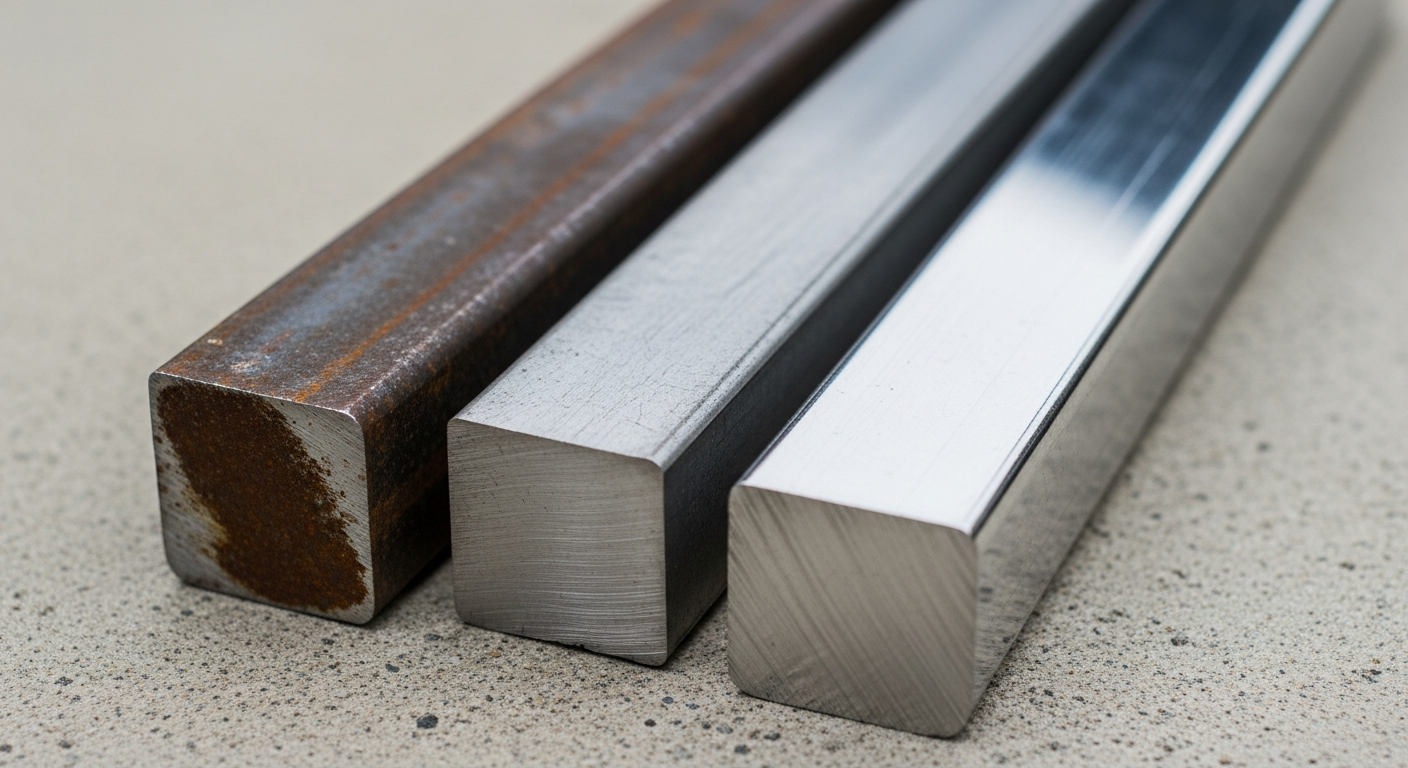
The Three Core Steel Families
Understanding this basic grouping is the first step to making a smart choice. Everything from cost to how we manufacture your part—be it stamping or machining—is dictated by which family the steel belongs to. The primary distinction comes down to the elements mixed in with the iron, as defined by organizations like the American Iron and Steel Institute (AISI).
| Steel Family | Key Alloying Elements | Primary Characteristic | Common Use Case | Relative Cost |
|---|---|---|---|---|
| Carbon Steel | Carbon (C), Manganese (Mn) | Good strength, machinability | General structural, brackets, frames | $ |
| Alloy Steel | Cr, Ni, Mo, etc. | High strength, wear resistance | Gears, axles, high-stress fasteners | $$ |
| Stainless Steel | Chromium (Cr > 10.5%) | Excellent corrosion resistance | Food processing, medical, marine | $$$ |
The Role of Carbon
In carbon steel, the amount of carbon is the main dial we turn to adjust properties. More carbon means the steel can be heat-treated to become much harder and stronger, but it also becomes less ductile (more brittle) and harder to weld.
The Power of Alloying
In alloy steels, we add specific ingredients to achieve targeted results. Think of it like a recipe. Need more toughness? Add nickel. Need it to stay strong when it gets hot? Add molybdenum. This allows us to create materials for the most demanding applications.
When Is a Simple Low-Carbon Steel Enough?
Your part is a simple enclosure or a mounting bracket. Do you really need to pay for a fancy alloy? When is "good enough" actually the best choice?
For most general-purpose structural applications that require good formability and weldability without high-stress demands, a low-carbon steel (often called mild steel) is the most cost-effective and appropriate choice.
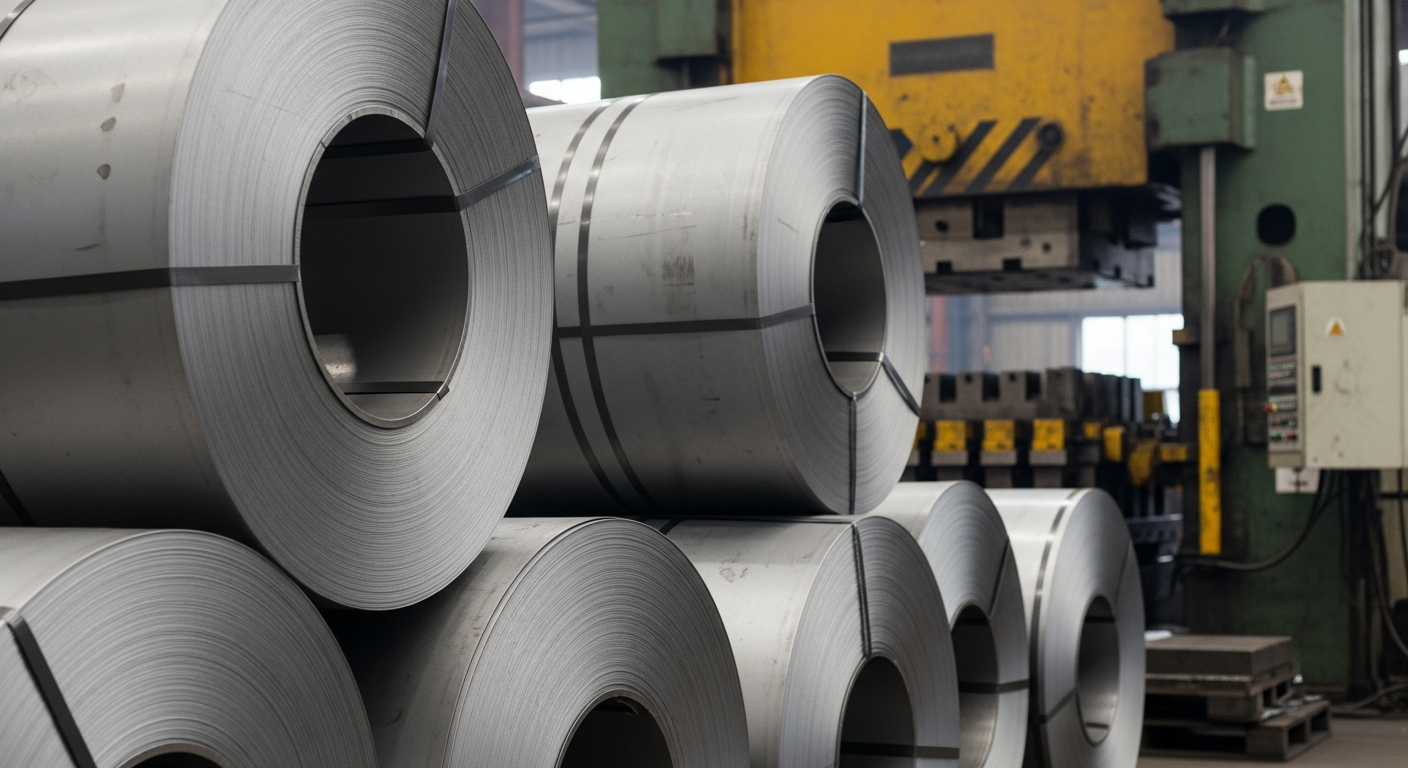
Low-Carbon Steel (e.g., 1010, 1018, A36)
This is the workhorse of the steel world, with a carbon content below 0.30%. It's relatively soft, highly ductile, and easy to weld, making it perfect for our stamping and forming operations. It doesn't have the high tensile strength of other steels, but it's tough and forgiving.
- Best for: General fabrication, enclosures, brackets, machine bases.
- Limitation: Cannot be significantly hardened through heat treatment.
Medium-Carbon Steel (e.g., 1045)
With a carbon range of 0.30% to 0.60%, this steel offers a great balance. It has increased strength and wear resistance compared to mild steel, and it responds well to heat treatment. This makes it a popular choice for machinery parts.
- Best for: Shafts, gears, axles, couplings, and other CNC parts that need more strength.
- Consideration: It's more difficult to weld successfully than low-carbon steel.
High-Carbon Steel (e.g., 1095)
Containing more than 0.60% carbon, this steel is all about hardness and wear resistance. Once heat-treated, it becomes very hard and can hold a sharp edge, but it also becomes quite brittle.
- Best for: Springs, cutting tools, high-wear surfaces.
- Warning: It is very difficult to bend, form, or weld.
What Do You Gain by Adding Elements Like Chromium and Molybdenum?
You've been told your part needs an "alloy steel" like 4140. What does that number mean, and what performance benefits are you actually paying for?
Alloying elements are targeted performance boosters. They enhance properties like hardenability, strength, toughness, and temperature resistance far beyond what carbon alone can achieve, creating steel for high-stress, high-performance applications.
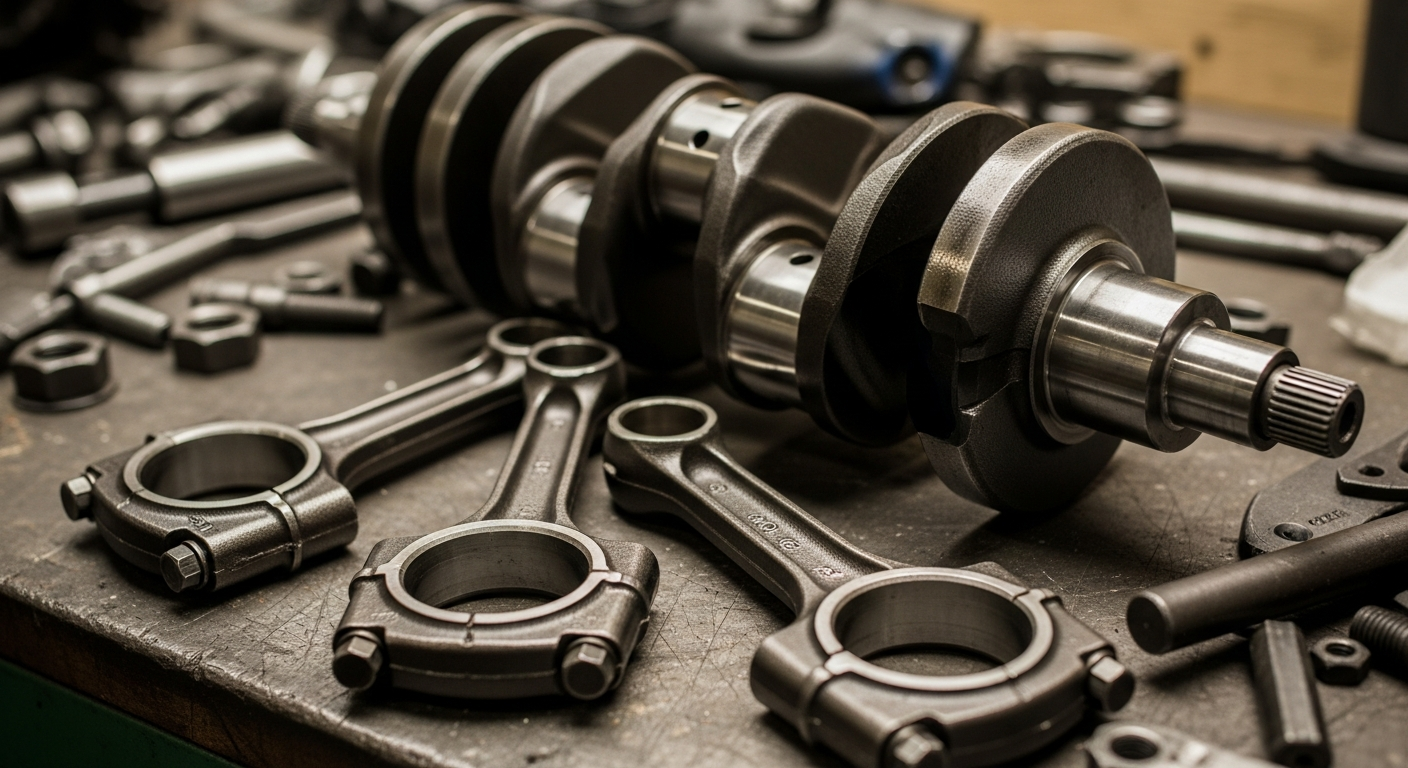
Decoding Common Alloying Elements
The numbers in a grade like "4140" are a code from the AISI/SAE system that tells us the key ingredients. For 4140, the "41" tells us it's a Chromium-Molybdenum steel, and the "40" tells us it has about 0.40% carbon content. Here’s what some of those key ingredients do:
| Alloying Element | Symbol | Primary Effect(s) | Common Application |
|---|---|---|---|
| Chromium | Cr | Increases hardness, wear resistance, corrosion resistance | Bearings, tools, structural alloys like 41xx |
| Nickel | Ni | Increases toughness, strength, impact resistance | Shafts, gears, high-impact structural parts (43xx) |
| Molybdenum | Mo | Increases strength at high temps, "hot hardness" | High-pressure boiler parts, aircraft components |
| Manganese | Mn | Increases hardenability and wear resistance | Found in almost all steels; key in 13xx series |
| Vanadium | V | Refines grain structure, increasing toughness | High-speed tools, springs, axles |
This ability to tailor properties is essential for critical components like high-strength screws and fasteners, where predictable performance under load is non-negotiable.
Isn't All "Stainless Steel" Basically the Same?
Your part is going to be used outdoors, so you specify "stainless steel" to prevent rust. But is it really that simple?
No, the stainless steel family is diverse. The most common distinction is between austenitic (300 series) and martensitic (400 series) grades. They have fundamentally different properties regarding corrosion resistance, strength, and magnetism.
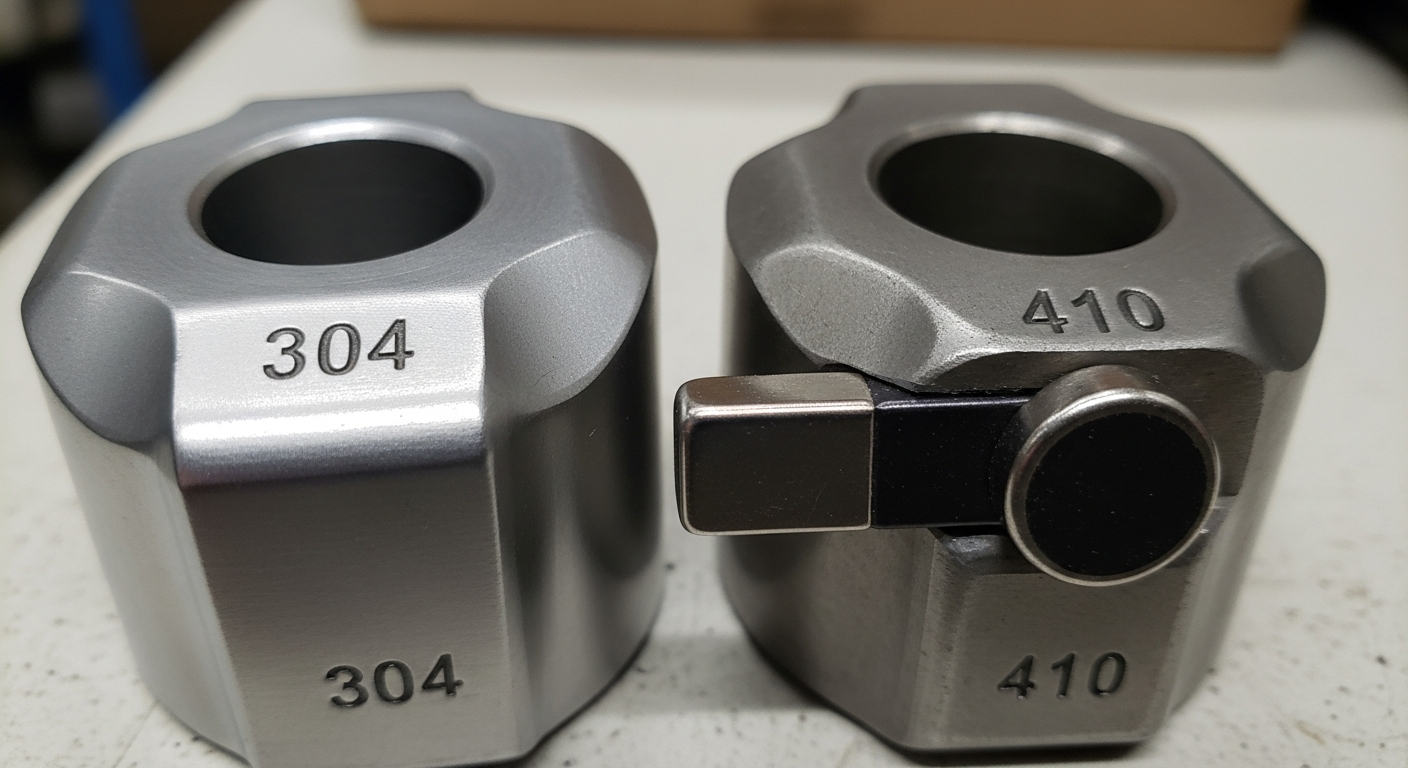
Austenitic (300 Series): The Corrosion Champion
This is what most people think of when they hear "stainless steel." Grades like 304 and 316 are in this family.
- Key Properties: Excellent corrosion resistance, non-magnetic, cannot be hardened by heat treatment. They get stronger through "work hardening" (the process of forming or bending them).
- 304 Stainless: The most common general-purpose stainless steel. Great for food equipment, architectural trim, and general corrosive environments.
- 316 Stainless: We add molybdenum to the recipe to create 316. This gives it superior resistance to chlorides (like salt water and de-icing chemicals), making it the standard for marine applications.
Martensitic (400 Series): The Hard and Strong One
Grades like 410 and 420 fall into this category. Their lower chromium content makes them less corrosion-resistant than the 300 series, but their higher carbon allows them to be heat-treated to very high hardness levels.
- Key Properties: Good corrosion resistance (but not as good as 300 series), magnetic, can be hardened like a carbon steel.
- Best for: Cutlery, surgical instruments, valve components, and wear-resistant parts. Learn more about the different types on the Wikipedia page for Stainless Steel.
How Do You Guarantee You're Getting the Steel Grade You Paid For?
You've done your homework and specified the perfect, high-performance alloy steel. The parts arrive. How can you be certain the manufacturer didn't substitute a cheaper material to increase their profit margin?
Verification is impossible without a system. You must demand a Material Test Report (MTR) for the specific heat lot used and partner with an ISO 9001 certified supplier who can prove full material traceability.
The Power of a Material Test Report (MTR)
This document is your steel's birth certificate. It comes directly from the steel mill and provides two critical pieces of information for the specific "heat" (batch) of steel:
- Chemical Composition: It lists the exact percentage of every element, proving it meets the specification for that grade (e.g., verifying the chromium and molybdenum content in 4140).
- Mechanical Properties: It shows the results of physical tests done at the mill, such as tensile strength, yield strength, and elongation.
Traceability from Mill to Machine
Our ISO 9001 quality system is built on this traceability. When a new lot of steel arrives at our facility, the MTR is logged. That lot is tracked through our inventory to the specific machine running your job. This means we can trace the finished part in your hand back to the exact report from the mill that produced the raw material. This is a core part of the Production Part Approval Process (PPAP) we provide for all our OEM clients.
In-House Verification
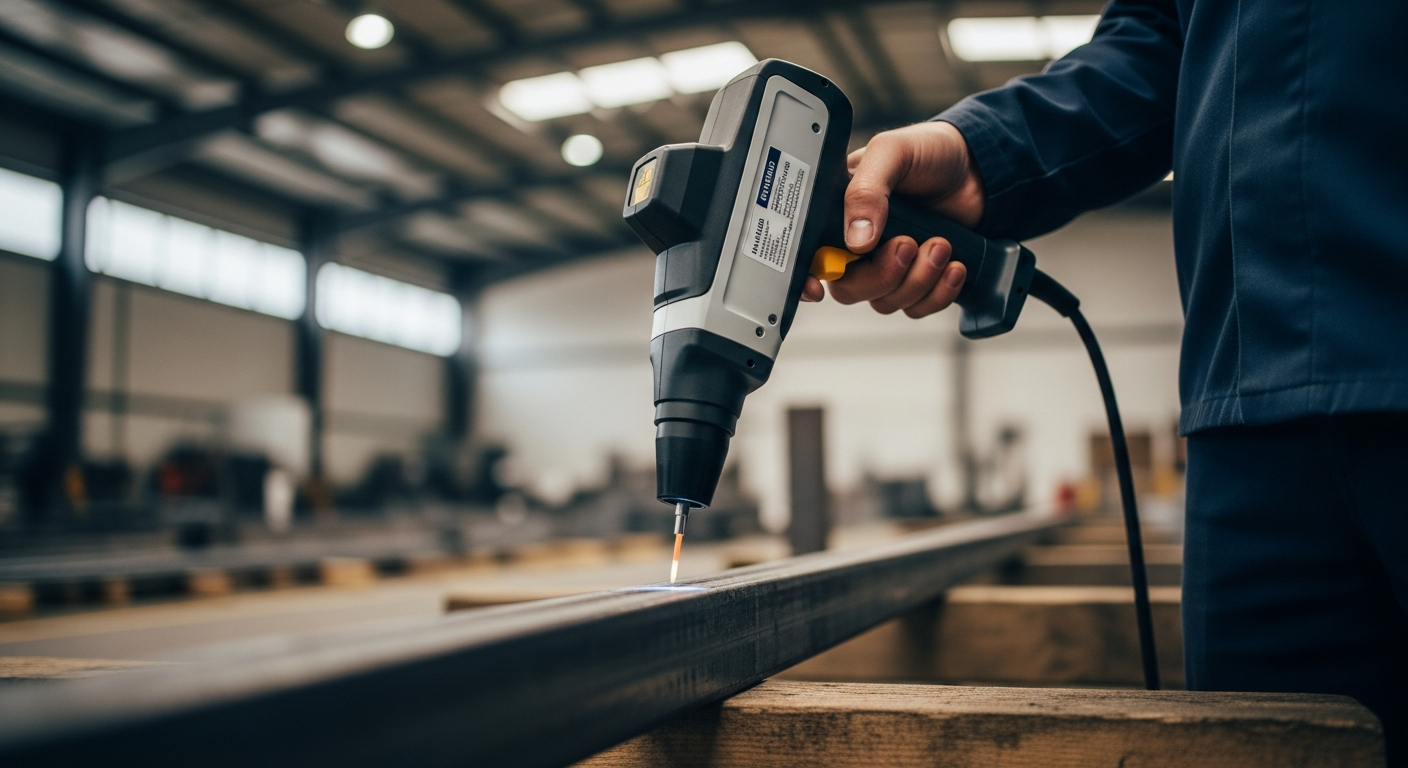
For critical applications, we don't just trust the paperwork. We have our own XRF (X-ray fluorescence) analyzers. These are handheld "guns" that can instantly give us a chemical breakdown of a material. We use them for incoming inspection of raw materials to provide an extra layer of certainty.
About the Author
My name is Kevin. I founded Prime Metals in 1993 after a long career as a buyer for large industrial companies in the US. I know the frustrations of dealing with suppliers who don't understand the materials they work with. I built this company to be different—to be a true technical partner who helps you make the right decisions from the very start.
Frequently Asked Questions (FAQs)
What is the difference between hot-rolled and cold-rolled steel?
Hot-rolled steel is rolled at a high temperature, resulting in a rougher, "scaly" surface but is less expensive. Cold-rolled steel is rolled further at room temperature, giving it a smoother finish, tighter tolerances, and increased strength.
What do the numbers in the AISI/SAE steel grading system mean?
It's a four-digit system. The first digit indicates the main class (e.g., 1xxx is carbon steel, 4xxx is molybdenum steel). The second digit indicates the secondary alloying elements. The last two digits represent the carbon content in hundredths of a percent (e.g., 1045 has ~0.45% carbon).
Why do you need to know the steel grade to quote a part?
The grade dictates everything: material cost, the speed at which we can machine it, the tooling required, and any necessary heat treatments. A simple-looking part made from a tough alloy steel can be much more expensive to produce than a complex part from mild steel.
Making the Right Choice
Choosing a steel grade isn't just about picking a number from a chart. It's a strategic decision that impacts your component's performance, lifespan, and total cost. Don't leave it to guesswork.
Let our team use their material expertise to help you select the perfect steel for your application.